
Fortune Cookie Friday: Give Thanks And Be Blessed
Do you need some blessings in your life? If you want to be happy and believe that blessings or good fortune will bring that happiness, then perhaps you should consider being grateful and giving thanks.
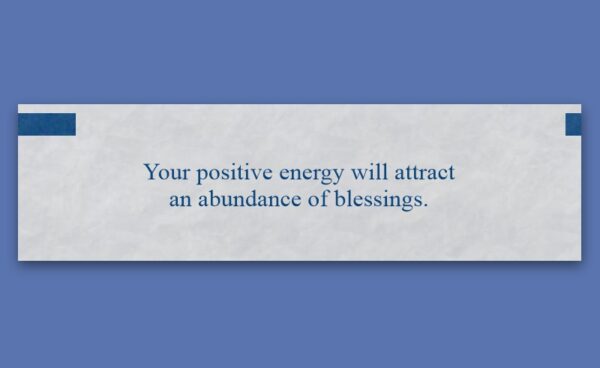
I’ve written about an attitude of gratitude before. Our personal attitudes and decision-making largely determine success or failure in life. Today’s fortune: “Your positive energy will attract an abundance of blessings” reminds me of that.
What are blessings?
Blessings come in many forms. They can be tangible gifts, awards, compliments, help from a friend, or even some wise counseling.
They are anything that benefits us. So, yeah, that gold star sticker, Christmas bonus, and even that ugly sweater Aunt Clara knitted for us are blessings.
We may overlook certain things as blessings because we don’t see their benefits when we receive them. That can make it difficult to accept them as blessings. But blessings are also a sign that someone is thinking about us—someone cares.
How to receive blessings
It should go without saying that we should say thank you when we receive a blessing. That gratitude is an important part of the process.
First, we should reflect on the good things that happened in our lives. It doesn’t matter how small or big they are. Then, take a moment to enjoy the happiness you felt in those moments. Let it fill you up. You can even write them down in a journal to go back to later when life feels difficult.
Now that we have that feeling of gratitude, we can share it with others. Unfortunately, we don’t always say thank you, especially when we don’t like what we get or don’t see its purpose.
Let’s take advice, for example. Many people receive it—heck, even pay for it—and yet we disregard it as trivial. Why? Some possible reasons are that it doesn’t bring immediate satisfaction, or that it wasn’t what we were expecting, or maybe the advice goes against our wants and desires.
Nonetheless, we should be thankful for the blessings in our lives, and saying thank you is a great start. Beyond that, we should say it with purpose, not flippantly. Gratitude is the gift we give in return.
Imagine someone offers an item that we didn’t specifically ask for. We could:
- Blow them off without a word
- Not accept it and say “No thank you”
- Not accept it and say “No thank you. That’s very kind of you.”
- Accept it and say nothing
- Accept it and say thank you without feeling
- Accept it and say thank you and mean it
These are just a couple of scenarios to choose from, but each one displays a different feeling of gratitude, or lack thereof.
We should show the best form of gratitude even when we are at our worst. Gratitude at those times can make the most impact on ourselves and others.
The Science Behind Gratitude
Did you know that being grateful can improve your health and that of others? Multiple studies show just that.
One study from the University of California San Diego’s Rady School of Management found that simply saying thank you to coworkers can enhance their cardiovascular health and make them feel more confident. Gratitude strengthened their relationship and aided teamwork. When was the last time you thanked a coworker or teammate?
According to Florida International University psychology experts Philip Lazarus, associate professor of psychology, and Rachel Ritchie, associate teaching professor of psychology, gratitude “literally changes your biochemistry” and makes us healthier.
Whenever we feel gratitude, our brains release special hormones called endorphins that make us feel good. The experts also went on to state that “people who feel grateful have reduced levels of cortisol, the “stress” hormone; have better cardiac functioning; and are more resilient when they face emotional setbacks or negative experiences.” When we show gratitude, we can also reduce anxiety and depression. This helps us manage stress more effectively.
But wait, there’s more. Even if you’re not the one giving or receiving the gratitude, you can still benefit from it just by witnessing it.
Sara Algoe, an assistant professor in the department of psychology and neuroscience at the University of North Carolina at Chapel Hill, published that hearing someone show gratitude makes us feel good about the grateful person and recipient, and can help us connect more closely.
This “witnessing effect” happened in all sorts of scenarios, and it didn’t matter if the people were related to us. Seeing complete strangers being grateful to each other made us happy.
So, a little bit of gratitude makes us healthier, happier, and reduces stress and anxiety. We can even benefit from it when we watch others sharing gratitude. Can I get an “Amen”?
Which reminds me…
The Faith Behind Gratitude
Now that we covered a little bit of science, let’s look at some faith. There are a multitude of verses in the bible on gratitude and receiving blessings.
In Genesis 41:50-57 (NIV), Joseph shows gratitude to God for his blessings even after he was sold off as a slave by his brothers and later thrown into prison. Joseph knew the Lord was always with him during the bad times, so when things improved, he thanked Him by naming his sons Manasseh and Ephraim, because “God has made me forget all my trouble” and “God has made me fruitful in the land of my suffering.”
Joseph could have been bitter about living through such hardships, but he wasn’t. He focused on the blessings he received. Naming your child after someone is a great sign of respect and gratitude, and he gives that to God.
Praying to God is also a grateful act. Are we not asking for His guidance, His help? Philippians 4:6 reads, “Do not be anxious about anything, but in every situation, by prayer and petition, with thanksgiving, present your requests to God.”
We should open our hearts and minds to God, and show gratitude for His time and compassion.
Being thankful for our blessings makes us happy, and in turn, we can pass that on to others. Luke 6:38 reads, “Give, and it will be given to you.” Remember how I said gratitude is the gift we give in return? Well, it also comes back to us when we give it.
These are just a few examples from the bible. Take some time to research some more, and be thankful for all you learn.
How to share blessings
Luke 6:38 reminds us to share not just our gratitude, but also our blessings. We should share our blessings with others as much as possible. Sure, we can support them financially or give them gifts, but remember that a heartfelt thank you or word of encouragement matters too. Also remember that it can matter to others who see you being grateful.
Take some time to share some positive energy with someone you see today. Write a grateful letter to a friend. Let the Holy Spirit fill you up and flow over you and everyone who witnesses it. Blessings are abundant, and we only need to give thanks to get them.